

We’ve been looking into the world of synthetic grass lately, and it seems like there’s a bit of confusion about what’s what. Many homeowners use the terms ‘turf’ and ‘artificial grass’ without really knowing if they mean the same thing. We’ve found that while they’re similar. There are actually some pretty clear differences, mainly in how they’re made and what they’re used for. Let’s break down the Differences Between Astro Turf and Artificial Grass so we can all get a clearer picture.
Key Takeaways
- Essentially, ‘turf’ often refers to synthetic grass designed for sports fields, built to be tough and handle lots of action.
- Artificial grass, on the other hand, is commonly used for looks, aiming to mimic real lawn grass with longer, softer blades.
- Key differences lie in their pile height, density, and colour, with turf typically being shorter, less dense, and a simpler green.
- While turf is ideal for high-traffic sports areas and commercial landscaping, artificial grass is favoured for residential gardens and decorative spaces.
- Both offer significant benefits like reduced maintenance, water savings, and year-round good looks compared to natural grass.
Understanding The Core Difference Between Artificial Grass and Astroturf
Right then, let’s get stuck into the nitty-gritty of what we’re actually talking about when we say ‘turf’ versus ‘artificial grass’, particularly the difference between the brand name “astroturf” and other artificial grass options. It’s a bit like calling all fizzy drinks ‘Coke’ – not quite right, is it? We often hear these terms thrown around like they’re exactly the same thing, and honestly, for a lot of people, they might as well be. But if you’re thinking about getting some for your garden or a sports pitch, there are some proper differences to get your head around.
Defining Artificial Turf
When we talk about artificial turf, we’re generally referring to the stuff you see on sports fields, which is often a brand name like “astroturf.” Think football pitches, hockey grounds, or even some playgrounds. It’s built to be tough, to handle all sorts of impact and wear and tear from people running, sliding, and kicking things. Usually, it’s got a shorter pile height, meaning the ‘blades’ aren’t very long, and it’s designed more for performance and durability than looking exactly like a manicured lawn. It’s the workhorse of the synthetic grass world, really.
Defining Artificial Grass
Now, artificial grass is a bit different. This is the kind of synthetic grass that’s become really popular for home gardens, patios, and even commercial spaces where you want that lovely green look without all the hassle of real grass. It’s made to look and feel as much like natural grass as possible, providing the feel of natural grass underfoot. So, you’ll find it has longer blades, a softer texture, and often comes in a few different shades of green to make it look more realistic. It’s all about the aesthetics and creating a pleasant, low-maintenance outdoor space.
Interchangeable Terms, Distinct Applications
So, while we often use ‘turf’ and ‘artificial grass’ interchangeably, and they do share a lot of the same benefits like low maintenance and water saving, their primary design intentions are quite distinct. It’s not just about the look; it’s about what they’re built to do. The key takeaway is that ‘turf’ often leans towards sports and high-traffic areas, while ‘artificial grass’ is more about mimicking natural lawns for visual appeal and general landscaping. Understanding this helps us pick the right product for the job, whether that’s a professional sports pitch or just making your back garden look a bit nicer all year round.
Key Distinctions in Intended Usage

When we’re looking at the differences between what people call ‘turf’ and ‘artificial grass’, a big part of it comes down to the difference between astroturf and artificial grass and what they’re actually meant to be used for. It’s not just about how they look, but how they’re built to perform.
Turf: Built for Athletic Performance
Generally speaking, when we talk about ‘turf’, we’re usually thinking about the stuff you see on sports fields. Think football pitches, rugby grounds, or even the surfaces for things like hockey or tennis. The main goal here is functionality and how well it can handle a lot of running, sliding, and general wear and tear. It needs to provide a consistent playing surface, which means it’s often designed with shorter fibres and a denser construction to support athletic movements. It’s all about providing a safe and reliable surface for athletes to compete on.
Artificial Grass: Designed for Aesthetic Appeal
On the other hand, ‘artificial grass’ is more commonly associated with home gardens, patios, and general landscaping. Here, the focus shifts towards making it look as much like real, natural grass as possible. This means longer, softer fibres, a more varied colour palette (often with brown thatch mixed in to mimic dead grass), and a generally more natural, lush appearance. It’s about creating a beautiful, low-maintenance outdoor space that looks good all year round, rather than withstanding the rigours of a football match.
Versatile Applications Beyond Sports and Lawns
While those are the main distinctions, it’s worth noting that the lines can blur a bit. You might find certain types of turf used in play areas for children, where some of the durability features are beneficial. Likewise, some higher-end artificial grasses are now being used in commercial spaces or even for things like rooftop gardens, where the aesthetic is still key, but the durability needs to be a bit better than a typical domestic lawn. It’s not always a strict either/or situation, and the best choice really depends on what you need the surface to do and how you want it to look.
Material Composition and Construction Variations
When we look at how artificial grass and turf are put together, there are some noticeable differences that really come down to what they’re designed to do. It’s not just about how they look, but how they’re built to perform and last.
Blade Length and Density
Think about the blades themselves in the context of artificial grass products. Sports turf, built for action, often has shorter, sturdier blades. This is to help with ball roll and player traction, enhancing the functionality of the playing surface. The density, or how many stitches are packed into a square metre, is usually lower for sports turf compared to landscaping artificial grass. This means fewer blades per square inch, which can make it feel a bit less plush but more resilient under heavy use, a key feature of artificial grass products.
Pile Height and Face Weight
Pile height is basically how tall the grass blades are. For sports, you’ll typically see shorter pile heights, maybe around 1.5 to 2.5 cm. Landscaping artificial grass, on the other hand, often has longer blades, sometimes up to 5 cm or even more, to give that lush, natural lawn look. Face weight, which is the weight of just the fibres before they’re attached to the backing, also differs in synthetic turf. Higher face weights generally mean more material and a plusher feel, which is often favoured for decorative artificial grass.
Overall Weight and Stitch Count
Beyond the blades, the overall weight of the product, including the backing, can also be a clue. Artificial grass designed for lawns might be heavier because it often has more backing material and sometimes a thatch layer mixed in to boost its realism. The stitch count, as mentioned with density, is also a key factor. A higher stitch count generally means a denser, more realistic-looking product, whereas sports turf might have a lower stitch count but use stronger fibres to withstand constant impact.
It’s interesting how these small construction details can make such a big difference in how the ‘grass’ performs and feels. We’ve seen some turf that feels almost like carpet, while other artificial grass looks so much like the real thing, you’d have to touch it to be sure.
Here’s a quick look at some typical figures:
| Feature Sports Turf Landscaping Artificial Grass |
| Pile Height | 1.5 – 2.5 cm | 2.5 – 5+ cm |
| Stitch Count (per sq m) | 9,500 – 12,000 | 15,000 – 18,000+ |
| Face Weight (oz/sq yd) | 50 – 80 | 60 – 90+ |
Visual and Tactile Characteristics
When we’re looking at the differences between what people call ‘turf’ and ‘artificial grass’, a big part of it comes down to how they look and feel. It’s not just about the colour, but the whole sensory experience.
Colour Palette and Realism
Generally speaking, the stuff designed for sports fields, which we often just call ‘turf’, tends to have a more muted, single shade of green. It’s built for function, so the colour is often a bit duller. On the other hand, what most people install in their gardens or around patios, the ‘artificial grass’, is usually made to look as much like real lawn grass as possible. This means you’ll often find it in a wider range of greens. Sometimes with those little brown thatch strands mixed in to really give it that authentic, natural look. We’ve noticed that the better quality artificial grass really nails this realistic appearance.
Texture and Softness
This is where a big difference really hits you. Sports turf, because it needs to be durable and allow for quick movement, often has a shorter pile and can feel a bit stiffer underfoot. It’s designed to be tough. Artificial grass, however, is typically made with a longer pile height and a denser construction. This gives it a much softer, more cushioned feel, making it more pleasant to walk on barefoot or for kids to play on. It’s more about that lush, inviting feel you’d expect from a well-kept lawn.
Appearance for Different Environments
So, how does this all translate to different places? For sports, that shorter, denser turf is perfect. It provides a consistent playing surface that can handle a lot of wear and tear. Think about football pitches or hockey fields; they need that resilience. For homes and gardens, though, the focus shifts. We want something that looks good, feels nice, and adds to the overall appeal of our outdoor spaces. That’s where the more realistic, softer artificial grass comes into its own. It’s about creating a visually pleasing and comfortable environment, whether that’s for relaxing in the garden or for a play area. It’s interesting how the same basic idea can be tweaked so much for different needs, and you can find some great options for synthetic turf. residential landscaping.
Practical Applications Across Various Settings
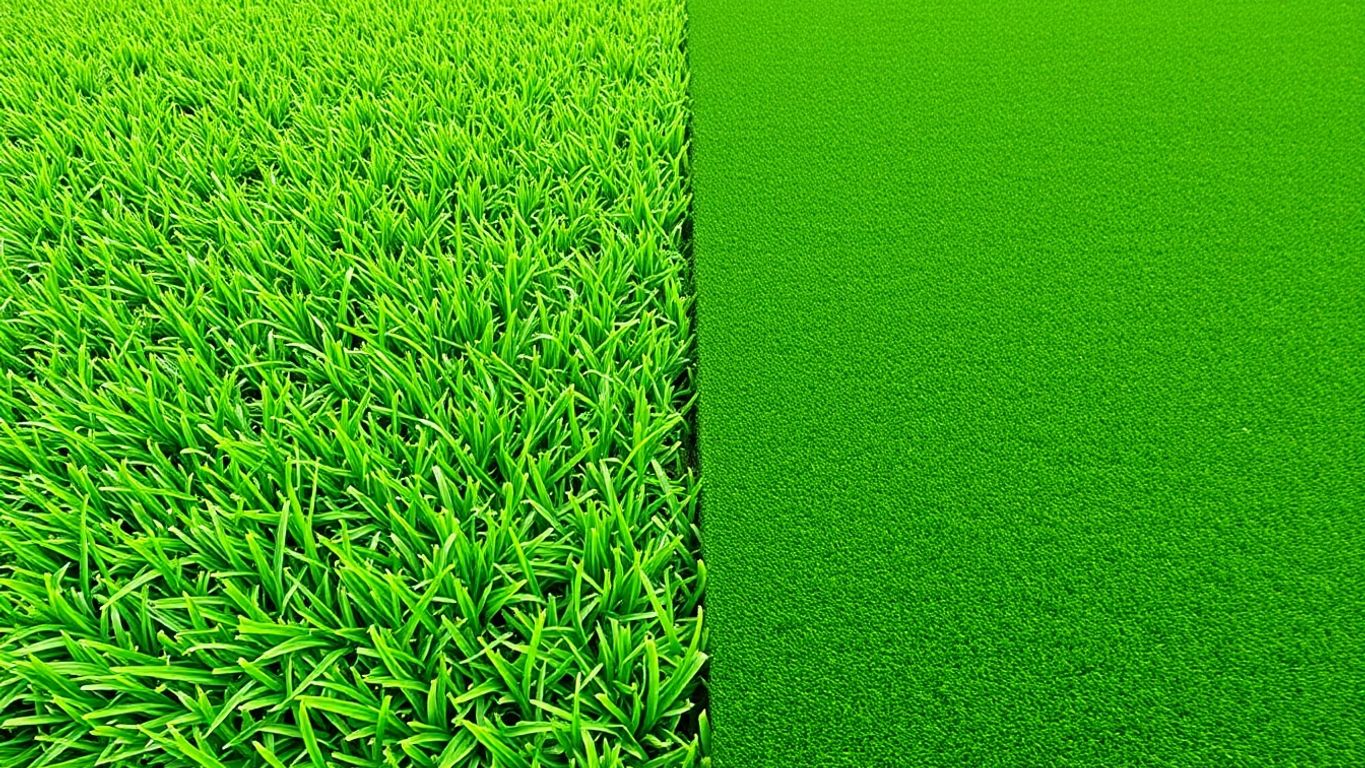
When we think about where these synthetic surfaces pop up, it’s really quite varied, from indoor facilities to outdoor sports fields. It’s not just about sports fields or pretty gardens anymore; the uses have really expanded.
Sports Fields and Playgrounds
For sports, especially those with a lot of running and sliding, turf is often the go-to. It’s built tough to handle constant wear and tear from athletes training and playing matches. Think about football pitches or rugby grounds; they need something that can take a beating and still look good. Playgrounds also benefit from this durability, offering a safer, cushioned surface for kids to tumble on. We’ve seen it used in schools and training facilities where the intensity of use is really high.
Residential Landscaping and Gardens
This is where artificial grass really shines for many of us. We’re talking about making our own back gardens look perpetually neat and tidy without all the mowing and watering. It’s great for creating a usable outdoor space that’s always ready for a barbecue or just relaxing. It can transform a patchy, difficult-to-maintain lawn into a lush green carpet. Plus, it’s a fantastic option for areas that don’t get much sun or have poor soil, where real grass would struggle to grow.
Commercial Spaces and Pet Areas
Beyond homes, you’ll find these materials in commercial settings too. Office buildings might use them on rooftops or in small courtyards to add a bit of greenery without the hassle. For pet owners, both types can be a godsend. They’re easier to clean up after pets than real grass, and they don’t get muddy paw prints tracked inside. Some specific products are designed with pets in mind, offering excellent drainage and durability for even the most active furry friends. We’ve found that choosing the right type makes a big difference for these specific needs. For example, some artificial grass options are specifically designed to be pet-friendly, offering superior drainage and odour control, making them a practical choice for pet owners. You can find out more about choosing the right type for your needs at acca.
It’s interesting how these synthetic surfaces have moved from niche sports applications to becoming a common sight in everyday life, offering practical solutions for both aesthetics and low maintenance.
Shared Benefits of Synthetic Grass Solutions
When we look at both artificial turf and artificial grass, it’s clear they share a lot of the same upsides. Honestly, it’s why so many of us are making the switch from real grass.
Reduced Maintenance and Upkeep
This is probably the biggest draw for most people. Forget about mowing the lawn every weekend, wrestling with the strimmer, or spending ages weeding. With either type of synthetic grass, that’s all a thing of the past. You might need to give it a sweep now and then to keep it looking tidy, maybe rinse it off if it gets a bit grubby, but that’s about it. It really frees up your weekends, doesn’t it?
Water and Cost Savings
Think about your water bills during those dry summer months when maintaining a lawn without artificial grass can be costly. With artificial grass, you don’t need to water it at all, except maybe for a quick clean. This means significant savings on your water costs, especially if you live somewhere with high water prices or hosepipe bans. Over time, these savings, combined with not having to buy fertilisers or pay for lawn treatments, really add up. It’s a smart investment, really. You can find out more about the benefits of artificial grass and how it can save you money.
Year-Round Aesthetic Appeal
One of the best things is that your garden or playing surface will look good no matter the weather, especially with quality artificial grass products. No more muddy patches after heavy rain or dry, brown areas in a heatwave. It stays consistently green and neat all year round. It’s quite something to look out at a perfect lawn even in the depths of winter.
Durability and Longevity
These synthetic surfaces are built to last. We’re talking years, often 15 to 20 or even more with good quality products and proper installation. Especially when you choose artificial grass. They can handle heavy foot traffic, kids playing, pets running around. Plus, all sorts of weather without looking worn out or patchy. It’s a much more robust solution than natural grass, which can struggle under heavy use.
So, Which One is Right for You?
Right then, we’ve gone through the nitty-gritty of what makes artificial grass and turf different. It’s clear that while the terms get tossed around a lot, there are indeed distinctions. Mainly in how they’re made and what they’re best used for. Turf is generally the tougher, shorter stuff built for sports action. While artificial grass aims for that lush, realistic look for our gardens and patios. Both offer a massive reduction in upkeep compared to the real thing, saving us time, water, and hassle, making them a great alternative to natural grass.
Ultimately, the choice really boils down to what you need it for – a kicking-about area for the kids or a nice-looking lawn without the maintenance, perfect for a homeowner who enjoys a cuppa outdoors. Have a good think about your own space and what you want to get out of it before you make the leap to synthetic turf.
Frequently Asked Questions
So, what’s the big difference between turf and artificial grass?
Well, it’s a bit like comparing apples and oranges, really! While both are fake grass, ‘turf’ is usually the tougher, shorter stuff made for sports fields where players run and slide a lot, unlike the softer feel of natural grass found in artificial grass. ‘Artificial grass’ is generally the softer, more realistic-looking kind. Hence why we put it in our gardens to make them look nice all year round.
Are artificial turf and artificial grass the exact same thing?
Not really! Think of it this way: ‘turf’ is a type of artificial grass, but not all artificial grass is turf. It’s like how all squares are rectangles, but not all rectangles are squares. Turf is specifically designed for high-impact sports. Artificial grass is more of a general term for fake grass used for lawns and decorative purposes.
Do we save time and effort with either artificial grass or turf?
You bet! We find that both types of fake grass save us a ton of hassle. We don’t have to worry about watering them, mowing them, or feeding them with fertilisers and bug sprays. It means more time for us to relax and enjoy our gardens or outdoor spaces!
Is it cheaper to have artificial grass or turf installed?
Generally, yes, synthetic turf is widely used for a variety of applications. While the initial cost of putting it in might seem a bit steep, over the years, we save a good amount on water bills. Plus, we don’t need to buy petrol for a lawnmower or spend money on grass seed and treatments when we choose artificial grass. It usually works out cheaper in the long run.
Which type of fake grass is best for our garden versus a sports pitch?
That’s a great question! For sports fields, the shorter, sturdier turf is usually better. This is because it can handle all the running and sliding without getting ruined. But for our homes, gardens, or places where we want a nice, soft feel underfoot, the longer, more natural-looking artificial grass is often the top choice for homeowners.
Does artificial grass look more like real grass than turf does?
Absolutely! We’ve noticed that artificial grass, with its softer blades and more varied green shades. Also, it looks much more like the look and feel of natural grass. It gives our gardens a lovely, neat appearance that stays looking good no matter the weather, which is pretty fantastic.